Loading
Field guides, teardowns and release tactics for developers who ship to the App Store and Play Store — written by the team that automates it.
Showing 18 of 18 guides in All posts.
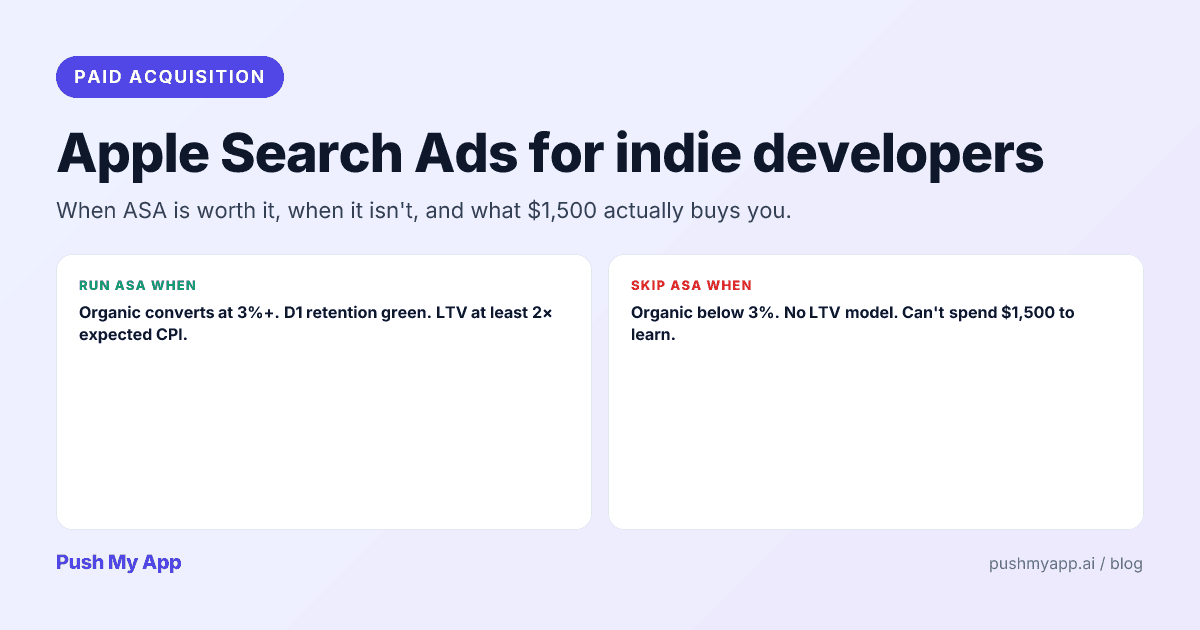
Apple Search Ads is now Apple Ads, with four placements and the same indie question: is it worth your money yet? The readiness gate, real learning costs, and the five keywords worth bidding on.
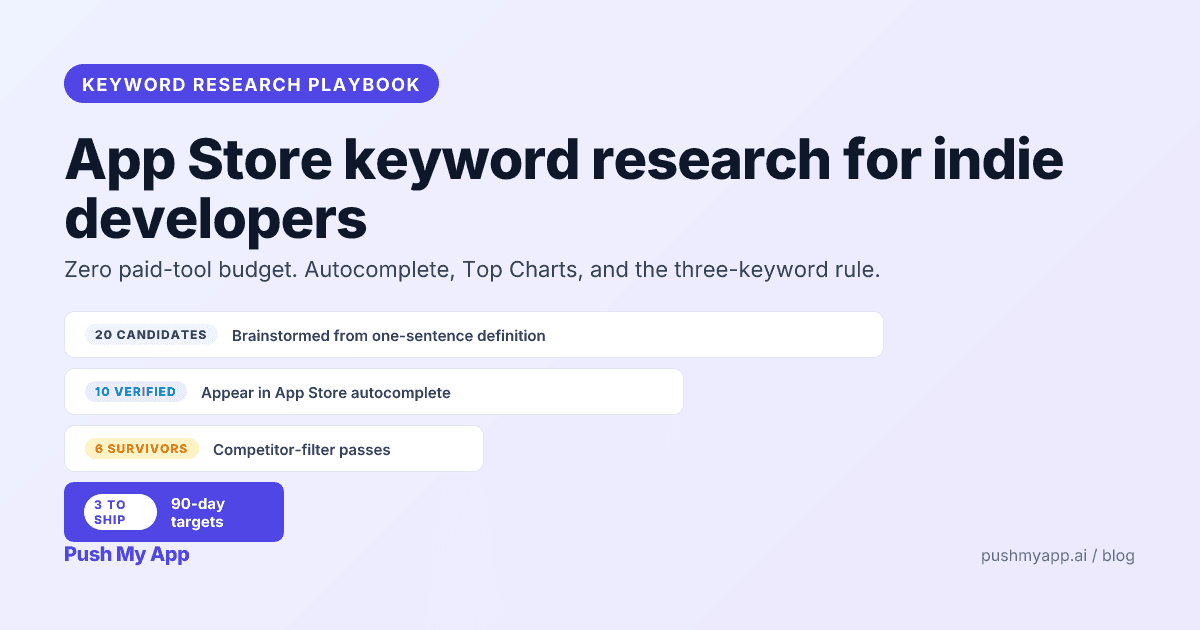
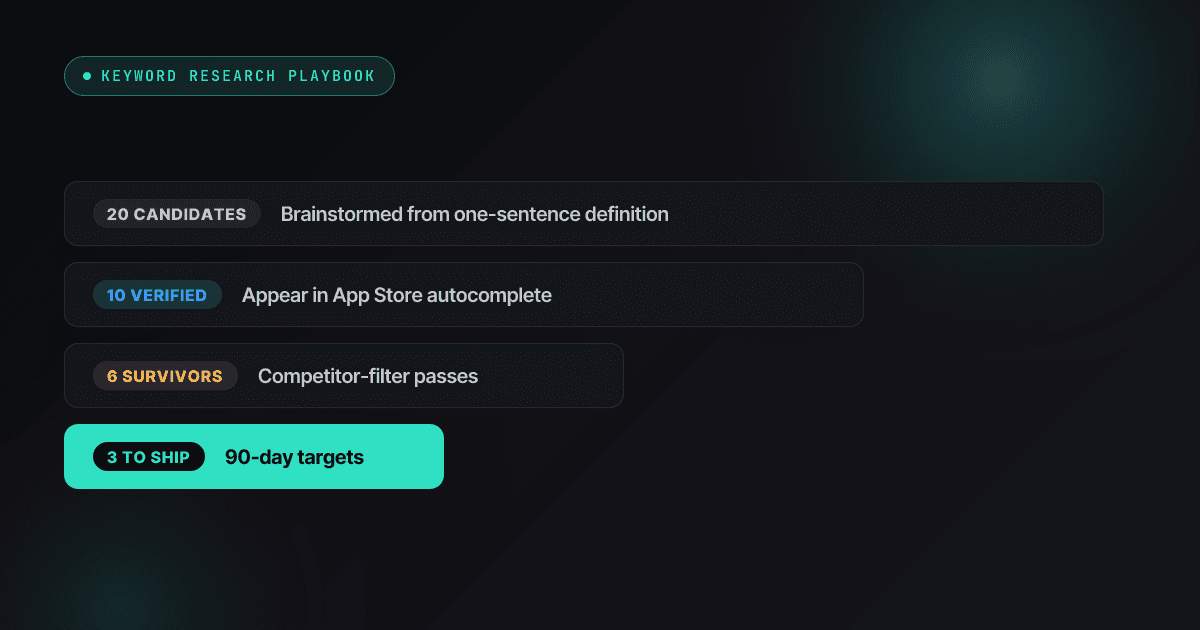
Zero-budget keyword research that actually works in 2026 — autocomplete mining, competitor frequency maps, Apple Ads popularity as a free volume signal, and the three-keyword rule.
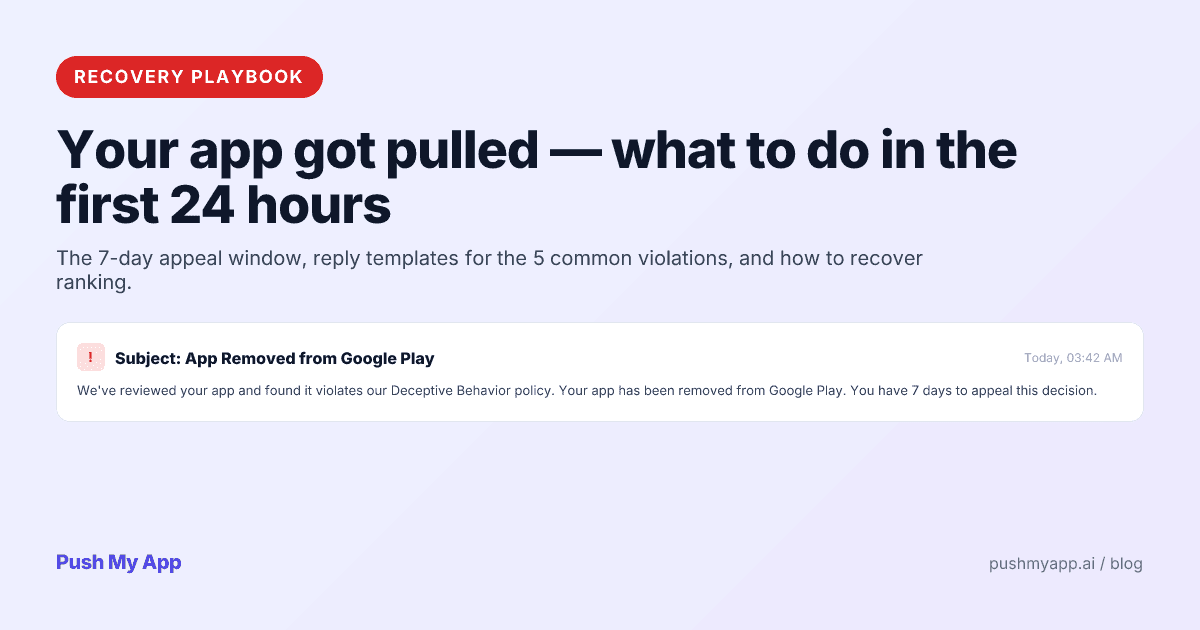
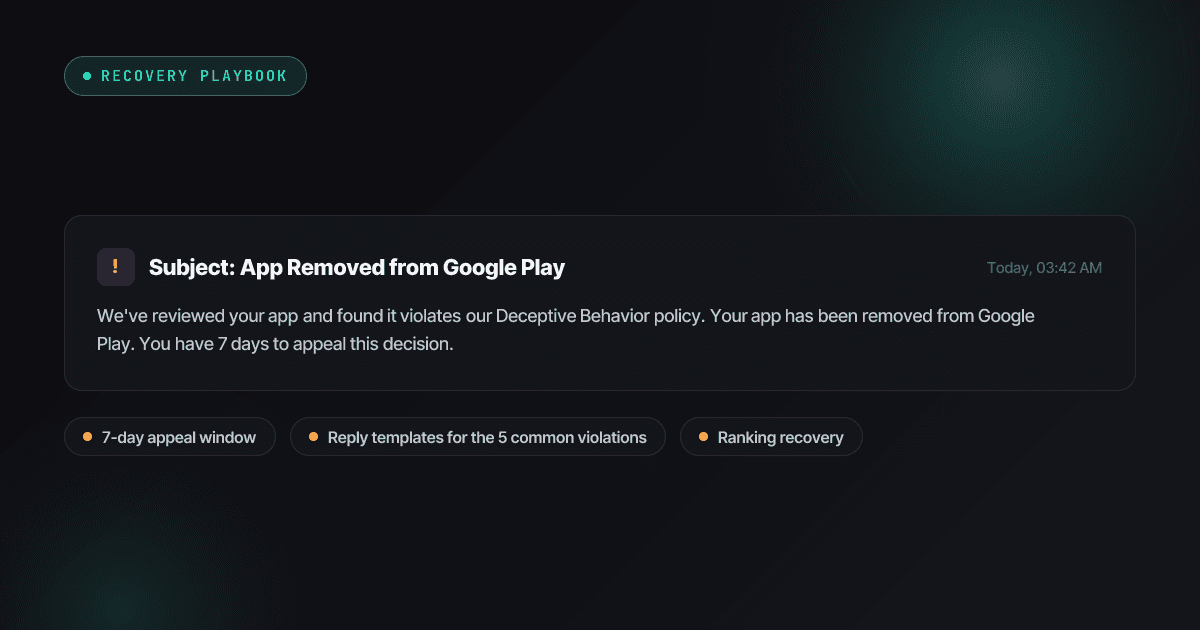
A live-app removal survival guide — first-24-hours triage, removal vs strike vs termination, reply templates for the six common pull types, appeals on both stores, and the ranking recovery curve.
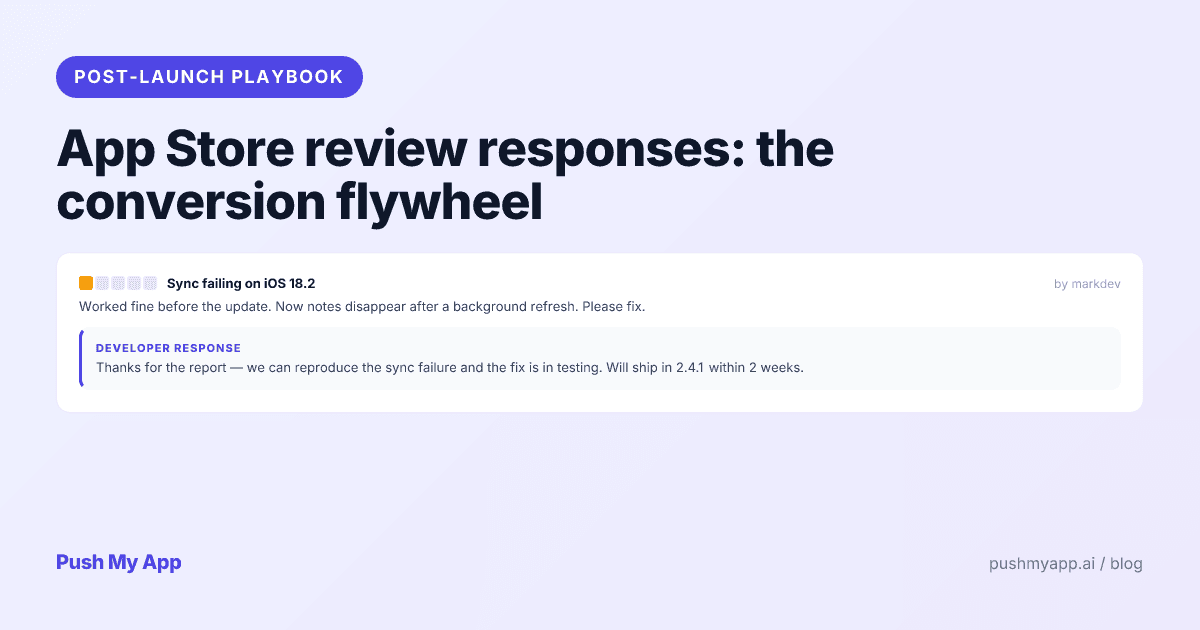
Developer responses render publicly next to every review — which makes them conversion copy. Reply templates for the five review types, the 48-hour window, Play's reply mechanics, and a sustainable cadence.
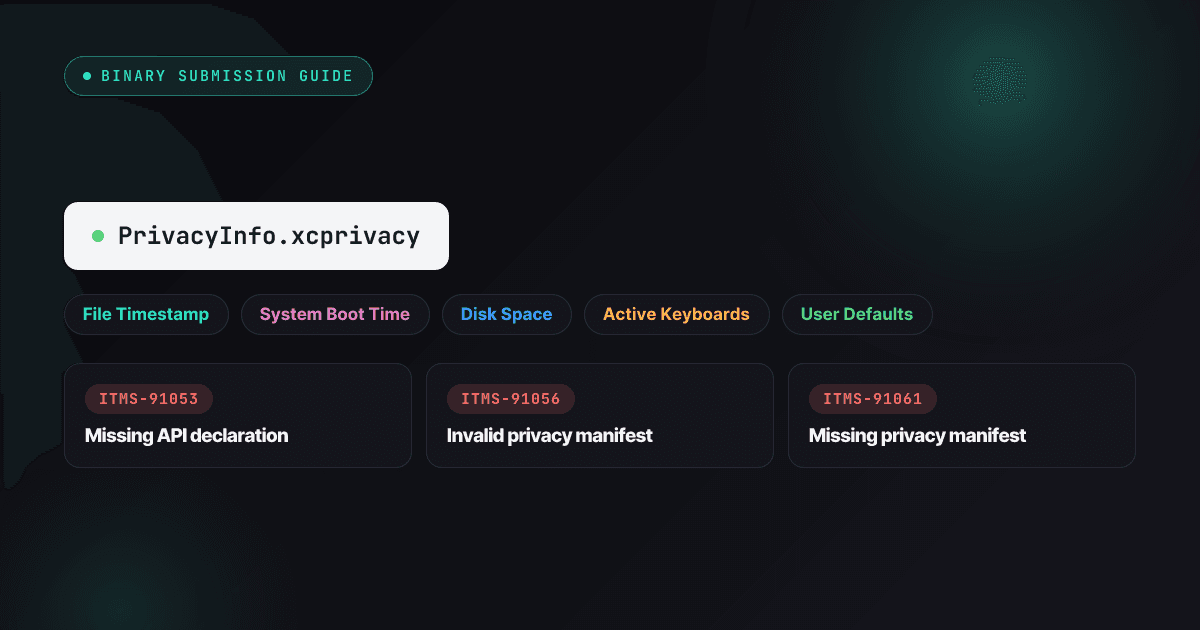
PrivacyInfo.xcprivacy explained for 2026 — the five required-reason API categories, SDK signing rules, the three ITMS rejection codes, Xcode's privacy report, and a 15-minute audit.
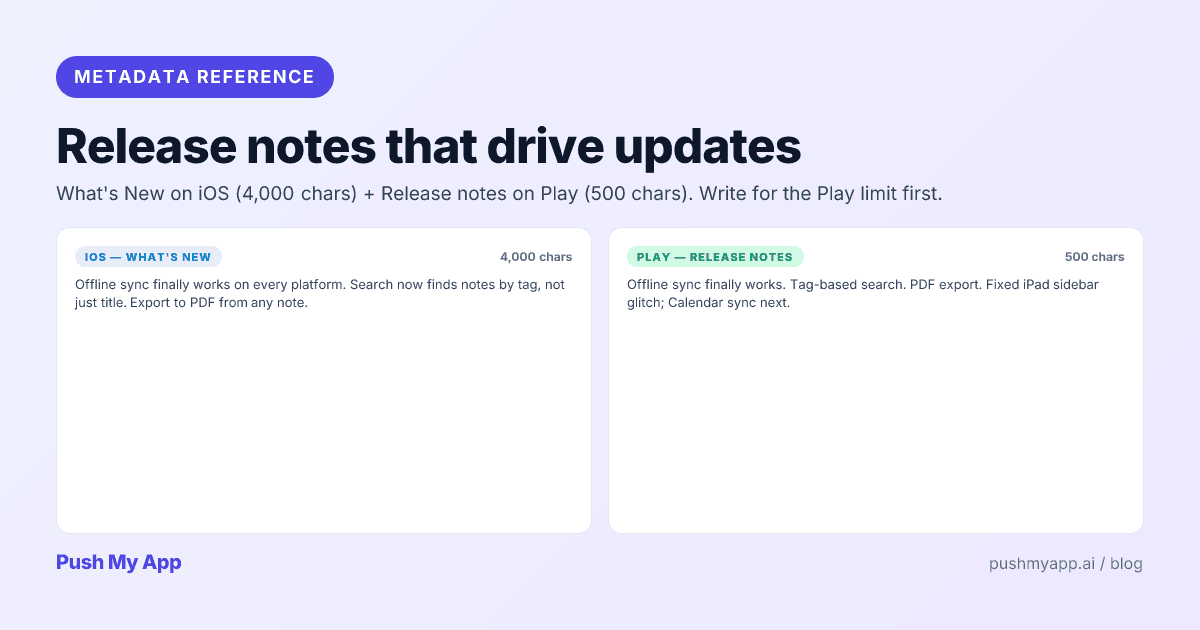
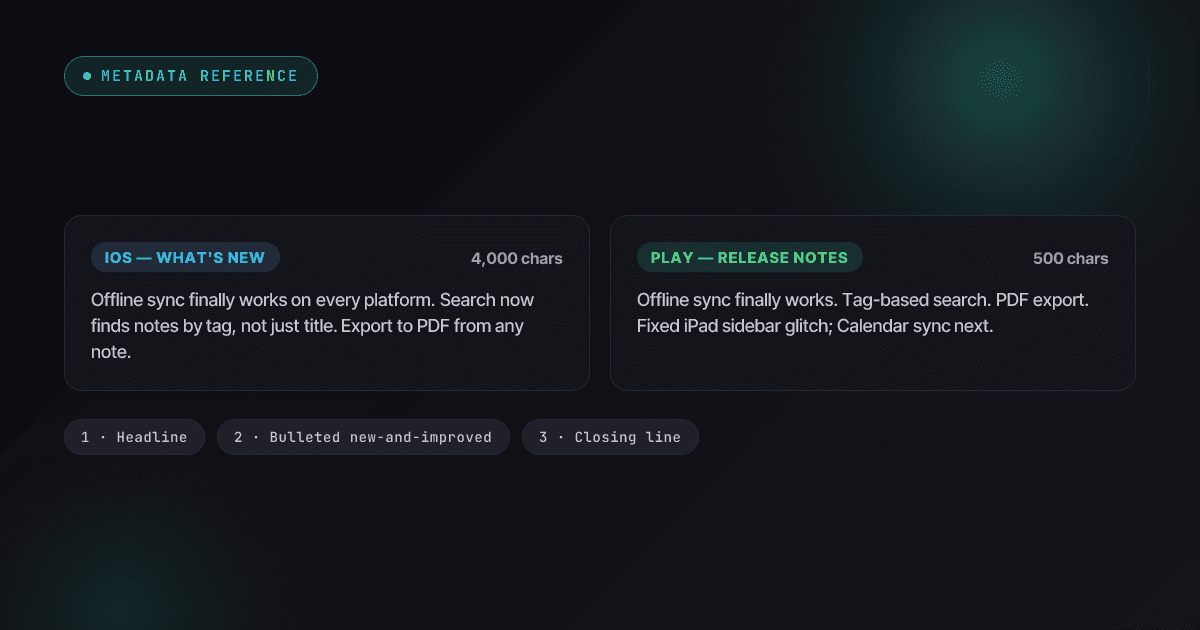
How to write What's New copy that earns trust instead of wasting it — the iOS and Play field rules, a 3-part template, the auto-update reality, and localization for release notes.
A zero-budget ASO system for indie developers in 2026: keyword clusters, metadata that converts, screenshot strategy, localization order, the review flywheel, and a 30-day sprint.
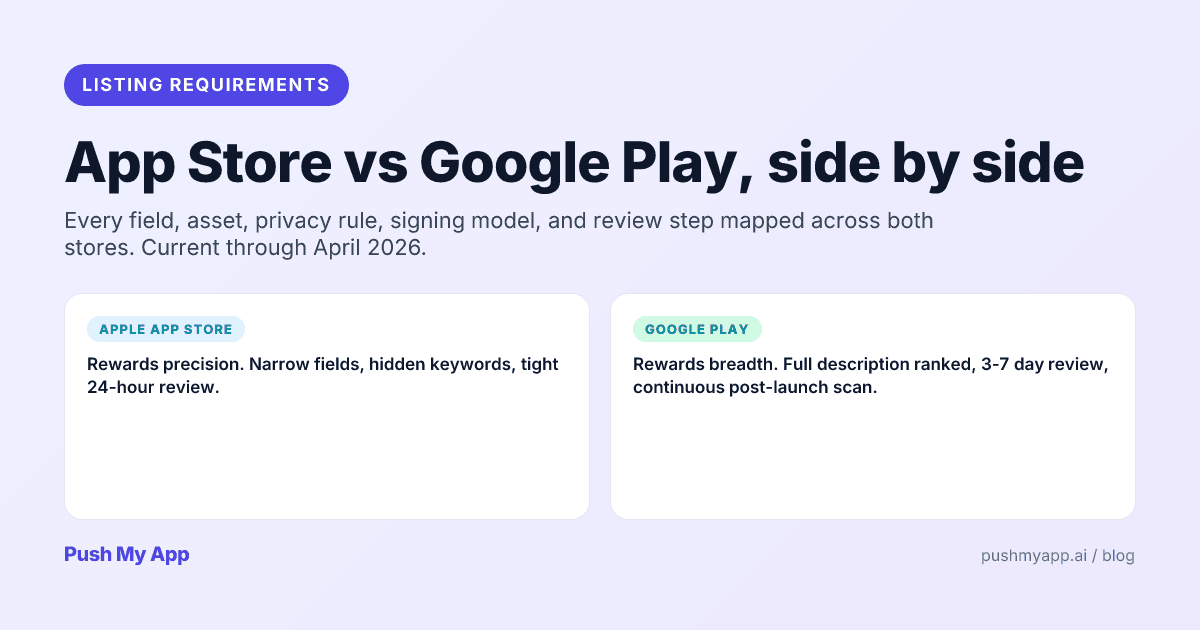
Every App Store and Google Play listing requirement compared for 2026 — metadata limits, assets, privacy forms, SDK floors, review gates, trader status, and account rules.
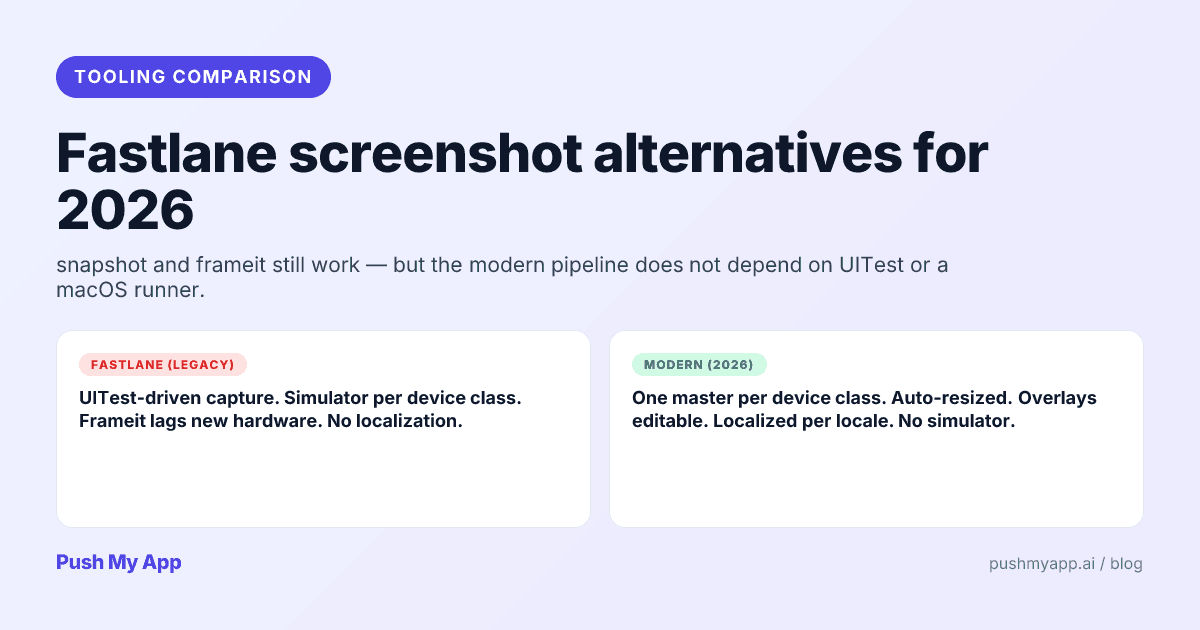
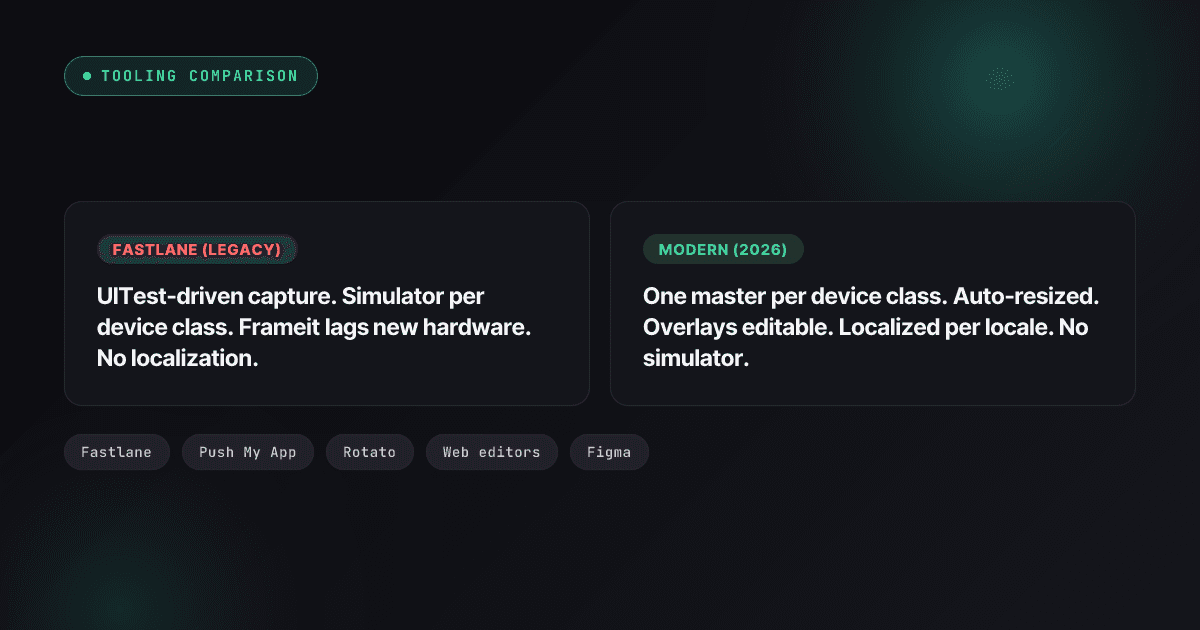
Where fastlane snapshot and frameit stand in 2026 after the Mobile Native Foundation handover, what to replace them with, and a migration path that keeps the rest of fastlane.
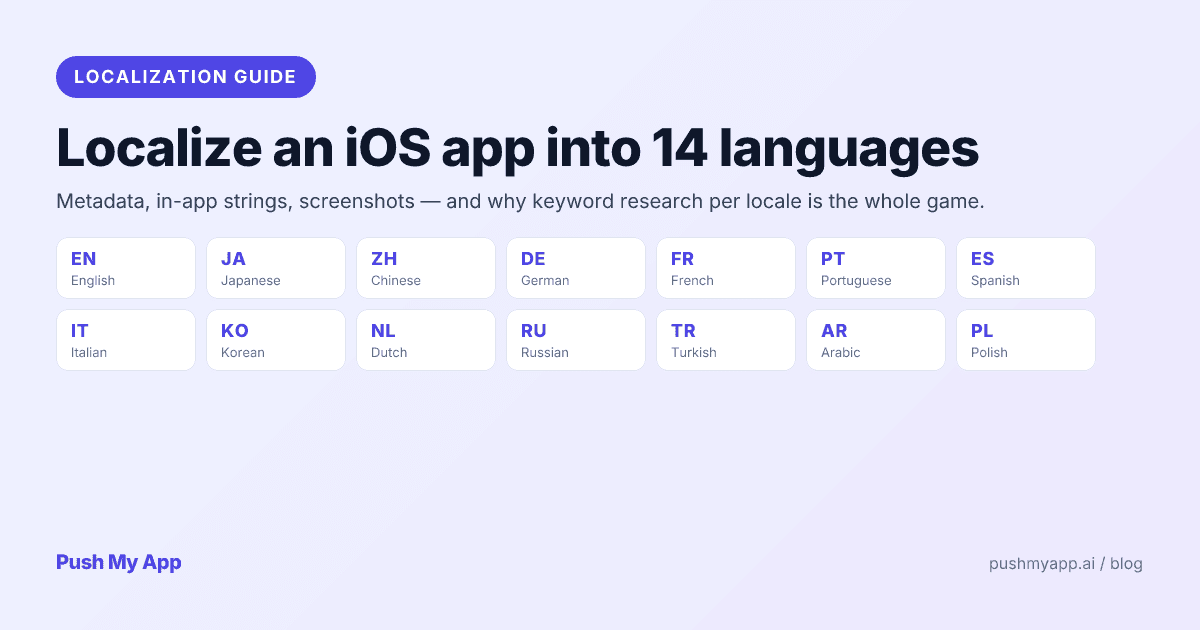
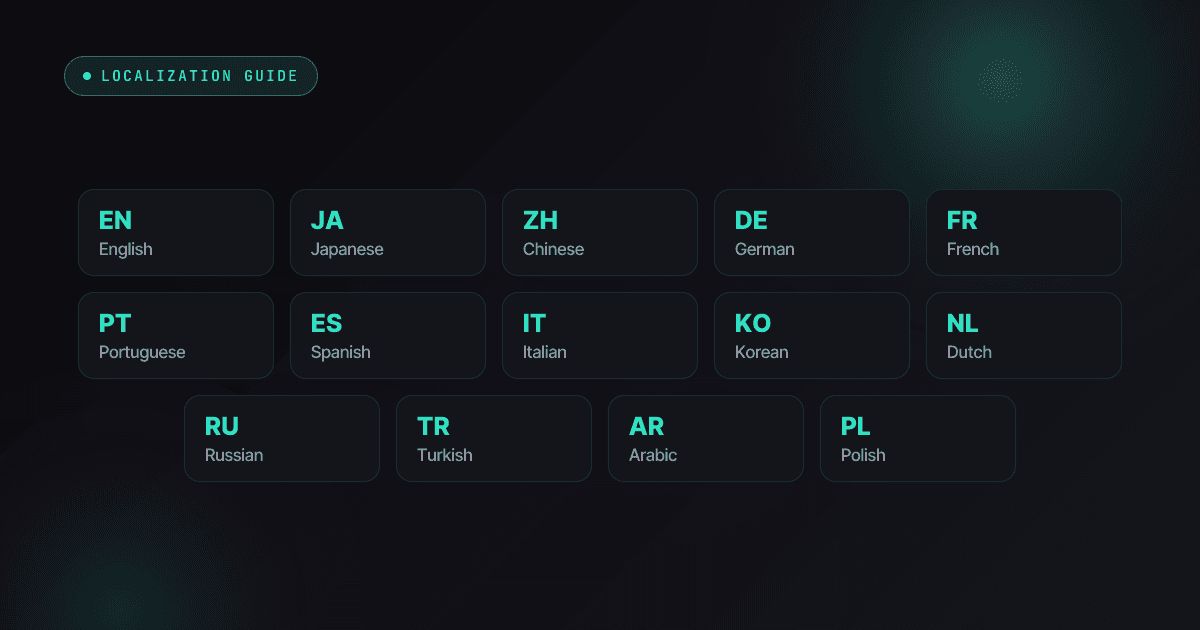
A 2026 working guide to iOS localization — the three layers, per-locale keyword research, the China ICP reality, String Catalogs, and the App Store Connect workflow step by step.
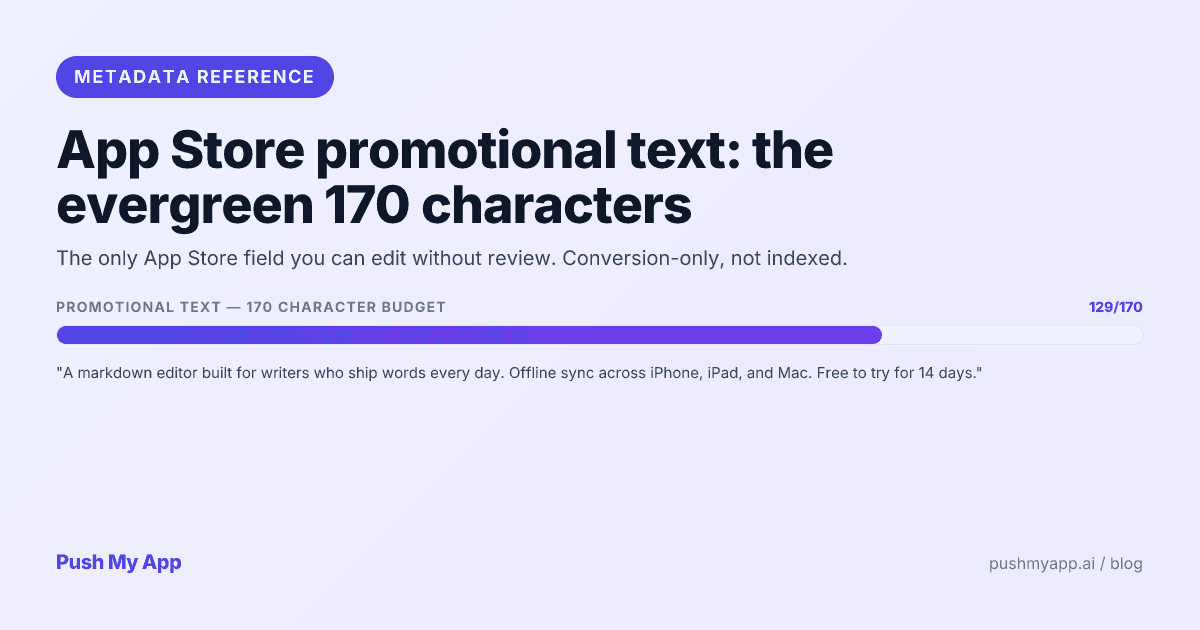
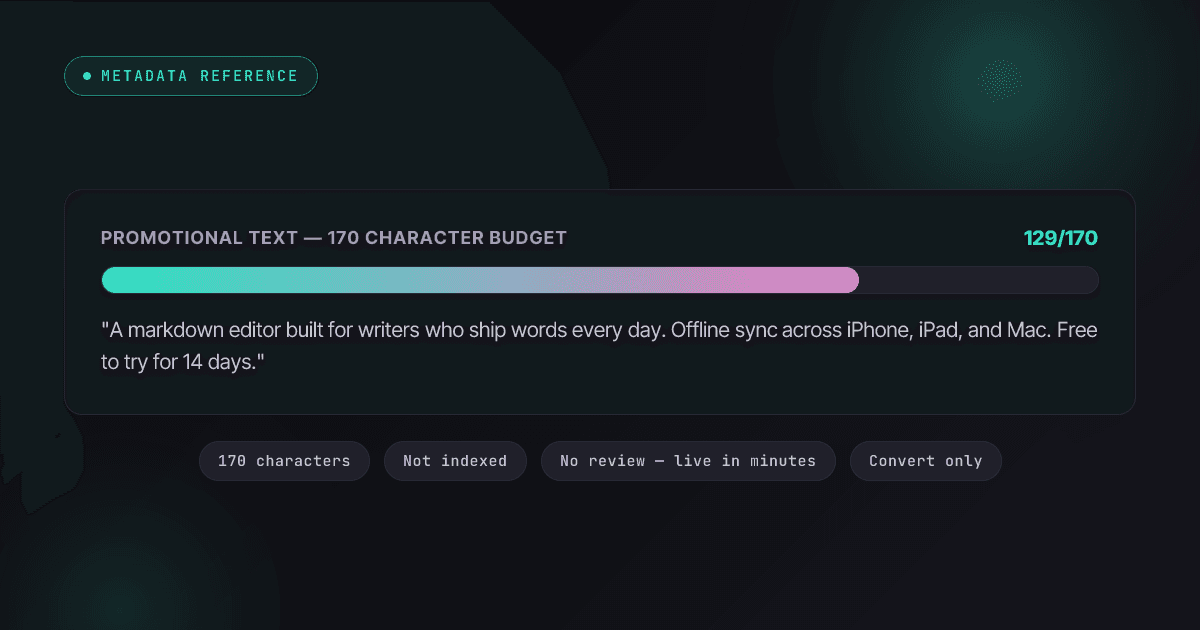
Promotional text is the only App Store field you can change without review. What it does, what Apple rejects under 2.3.1, a writing formula, worked examples, and how to test it in 2026.
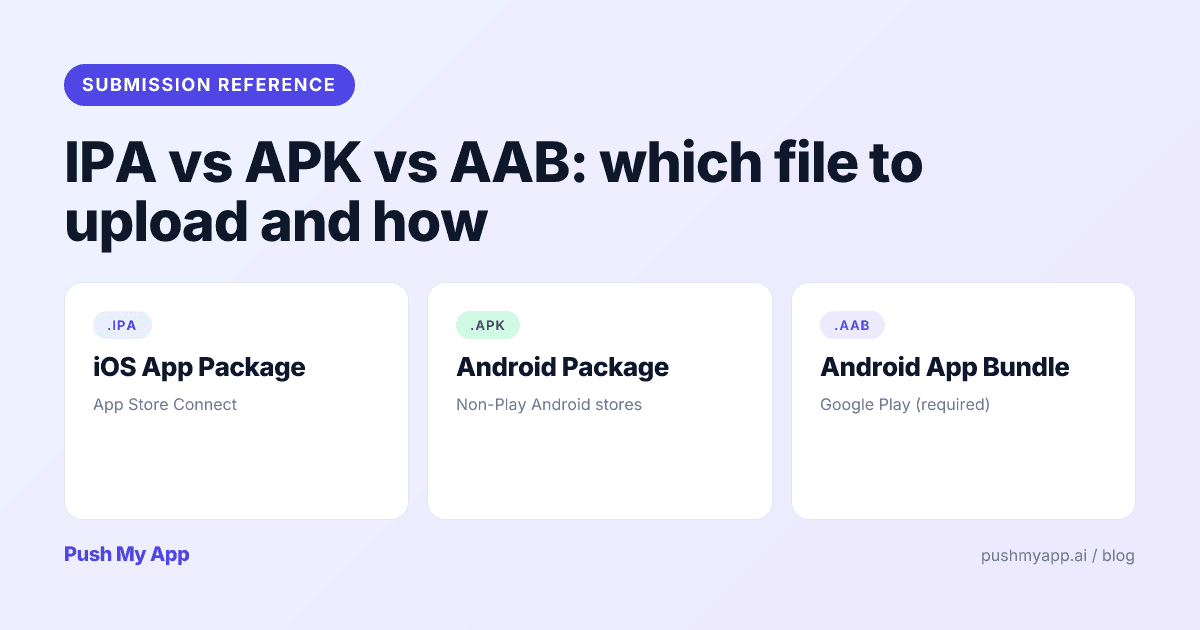
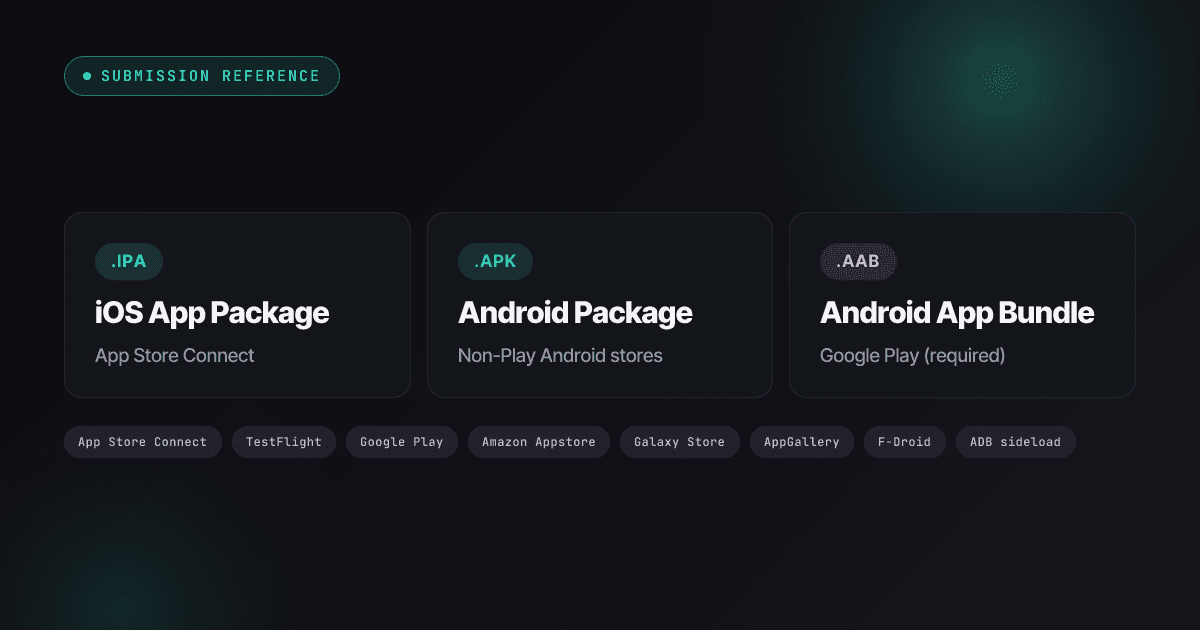
What IPA, APK, and AAB files actually are, which store takes which in 2026 — including the Xcode 26 mandate, API 36 deadline, Amazon's Android exit — and the signing model behind each.
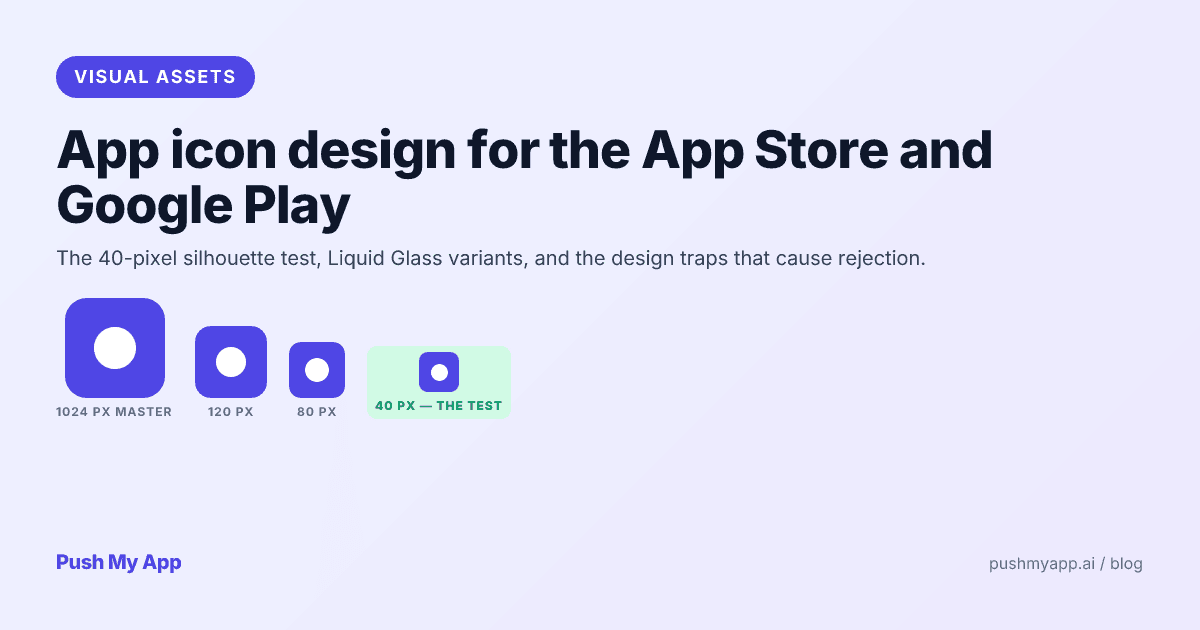
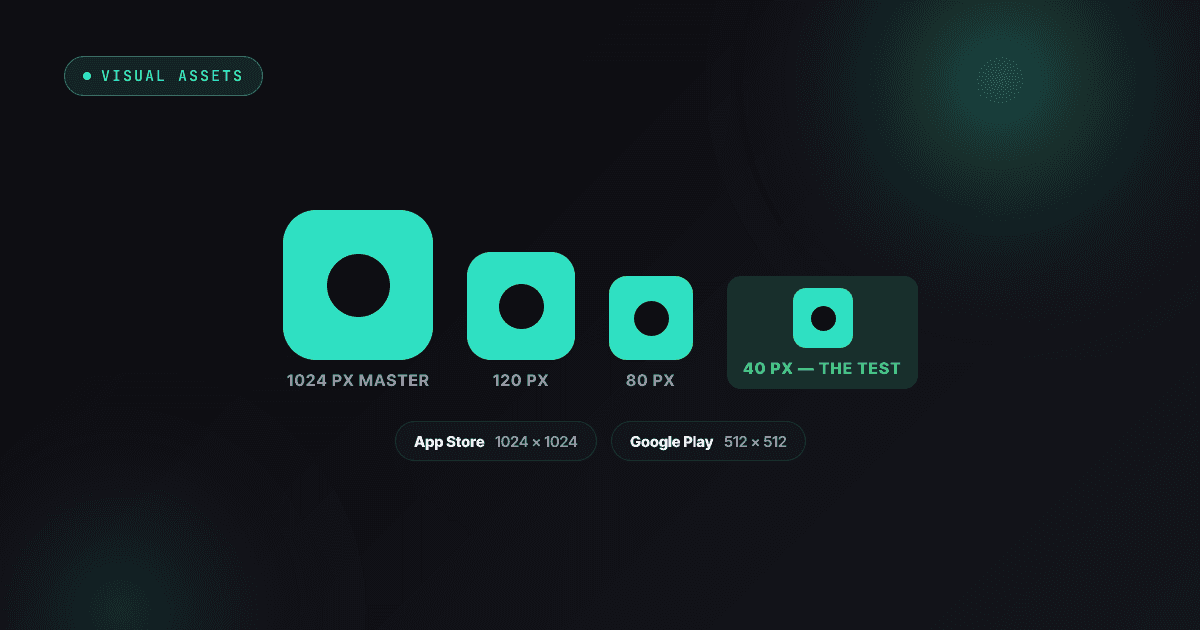
App icon rules and craft for 2026 — Apple's Liquid Glass appearance modes and Icon Composer, Android adaptive and themed icons, the 40px silhouette test, and the rejection traps.
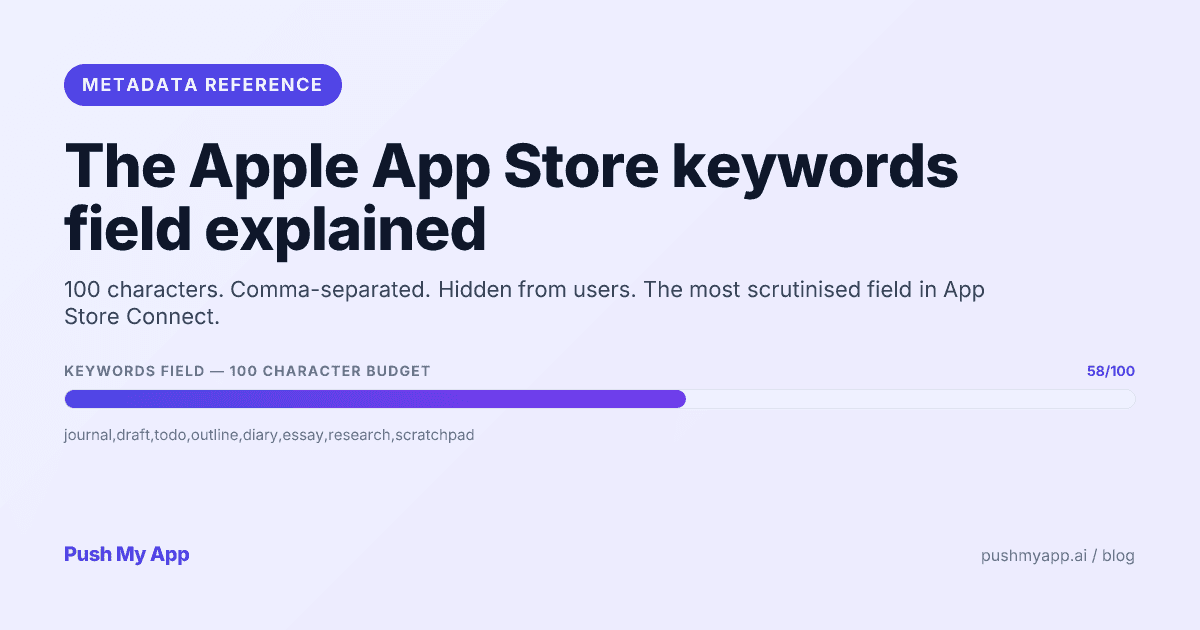
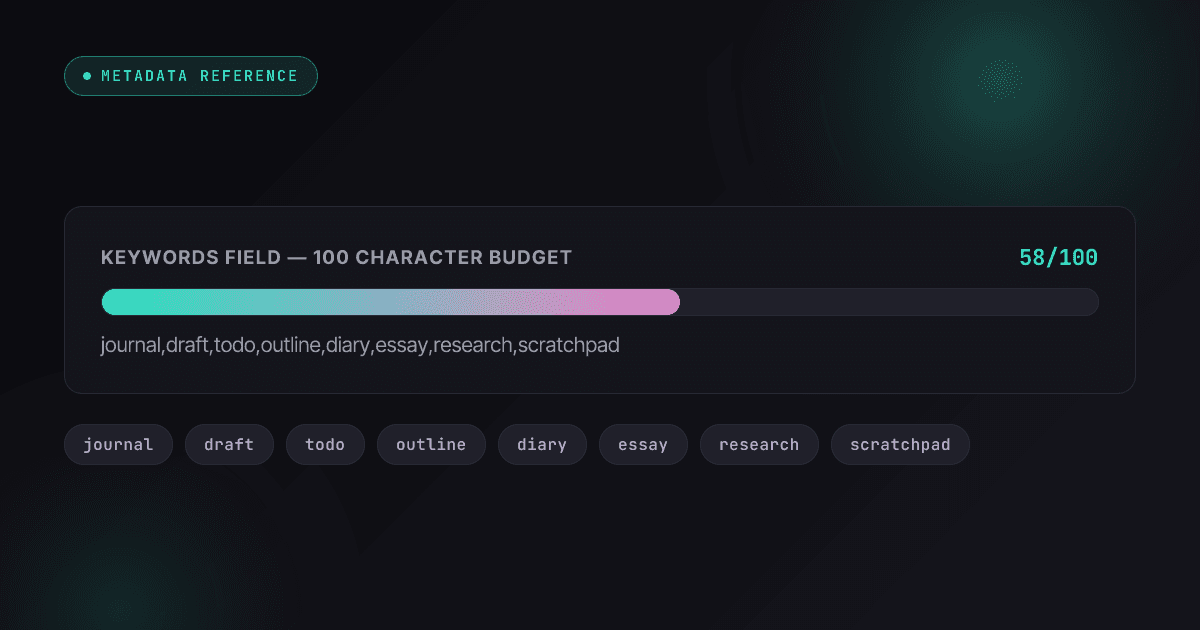
How Apple's hidden 100-character keywords field works in 2026 — what's indexed, the rejection rules, character-economy tactics, cross-localization, and custom product page keywords.
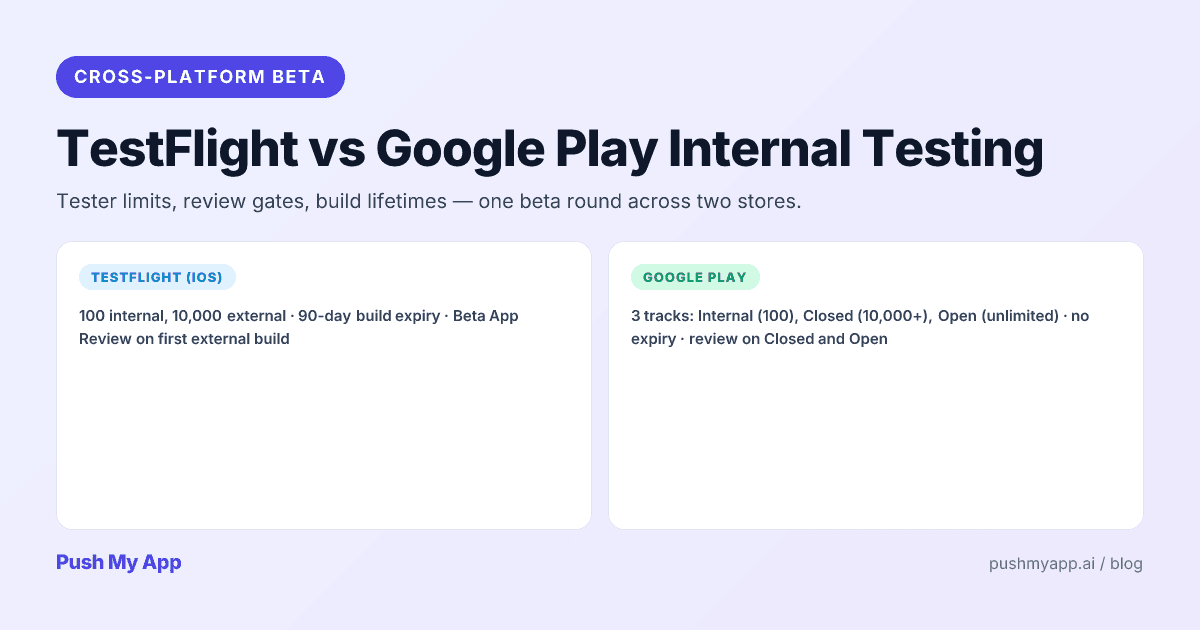
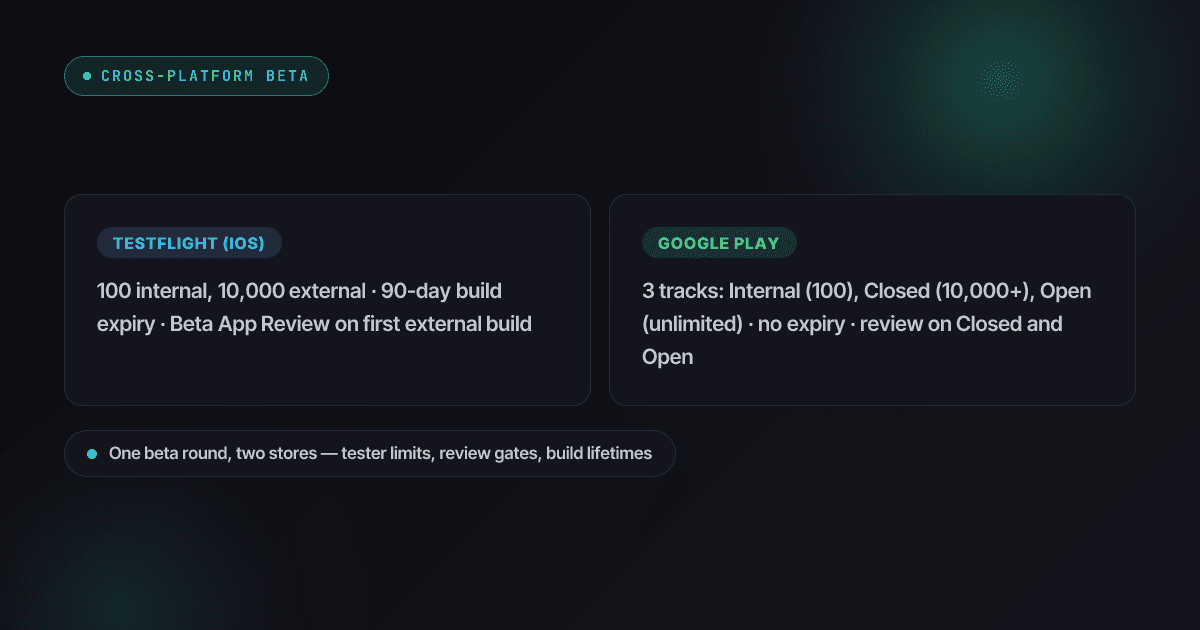
TestFlight vs Google Play testing tracks in 2026 — tester limits, review gates, the 12-tester production requirement, build lifetimes, and one workflow that runs both betas in parallel.
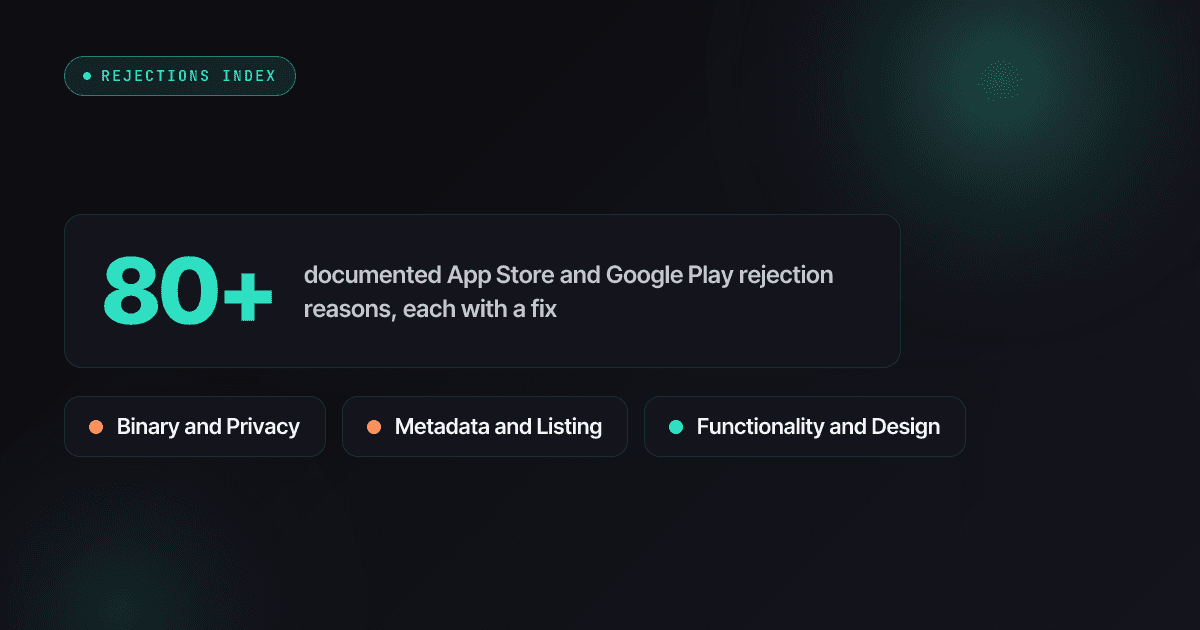
80+ App Store and Google Play rejection reasons that actually fire in 2026 — the November 2025 guideline changes, the Xcode 26 mandate, age-rating overhaul, with fixes and citable rules.
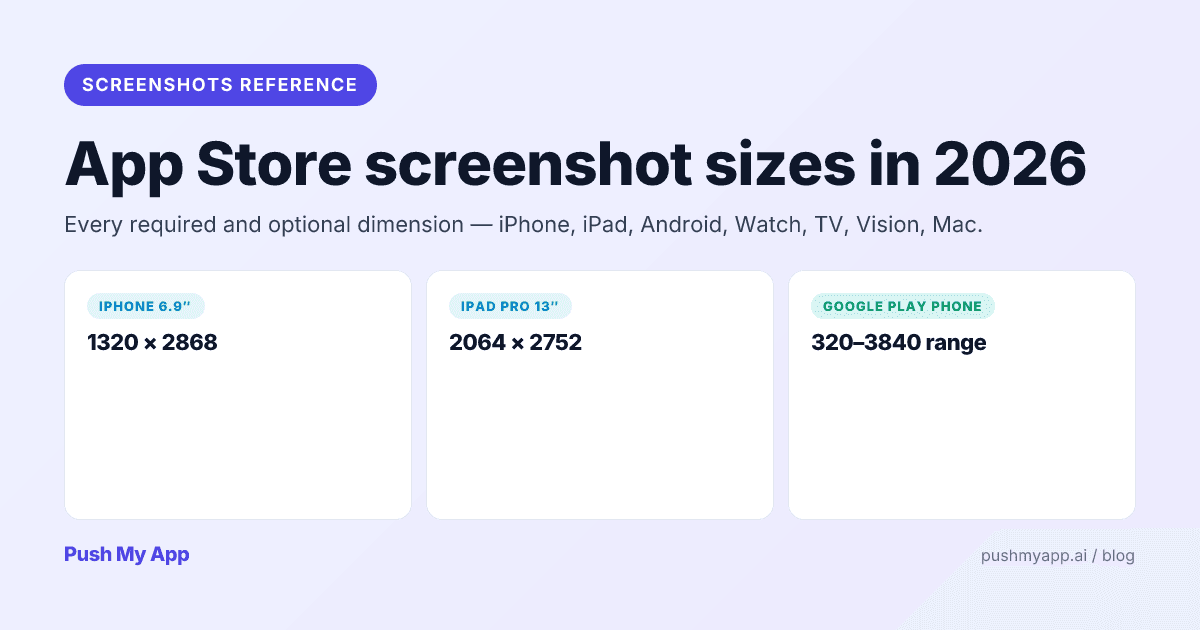
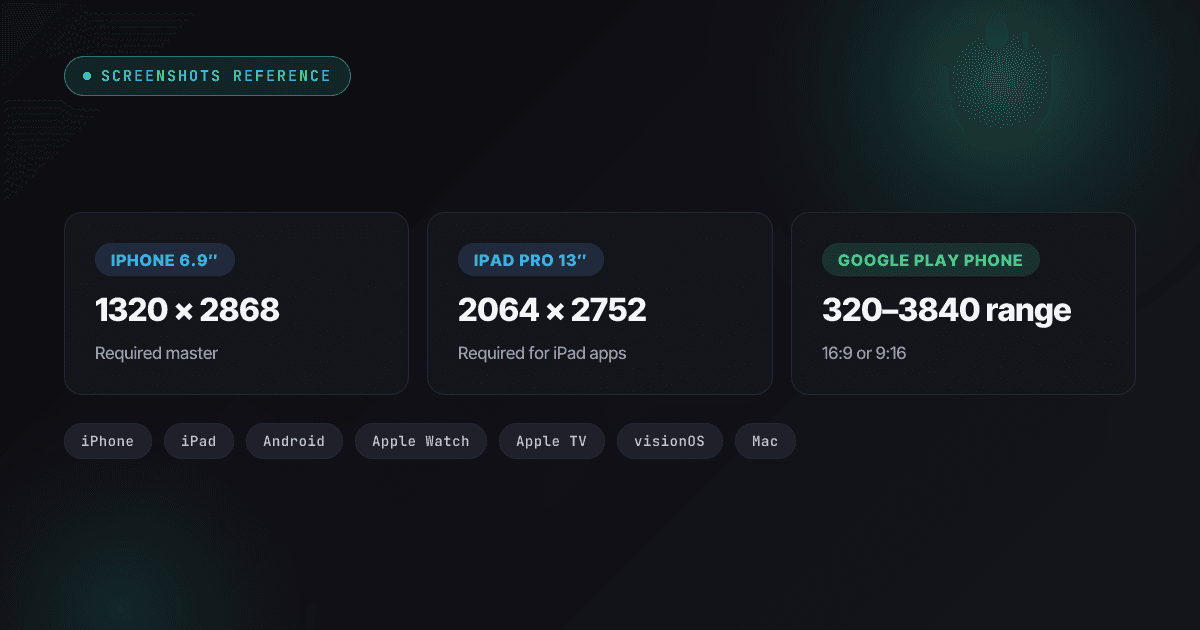
Every App Store and Google Play screenshot size for 2026 — the 6.9-inch iPhone class (including iPhone Air), iPad 13-inch, Watch Ultra 3, Play's 1080px featuring rule, and what auto-scales.
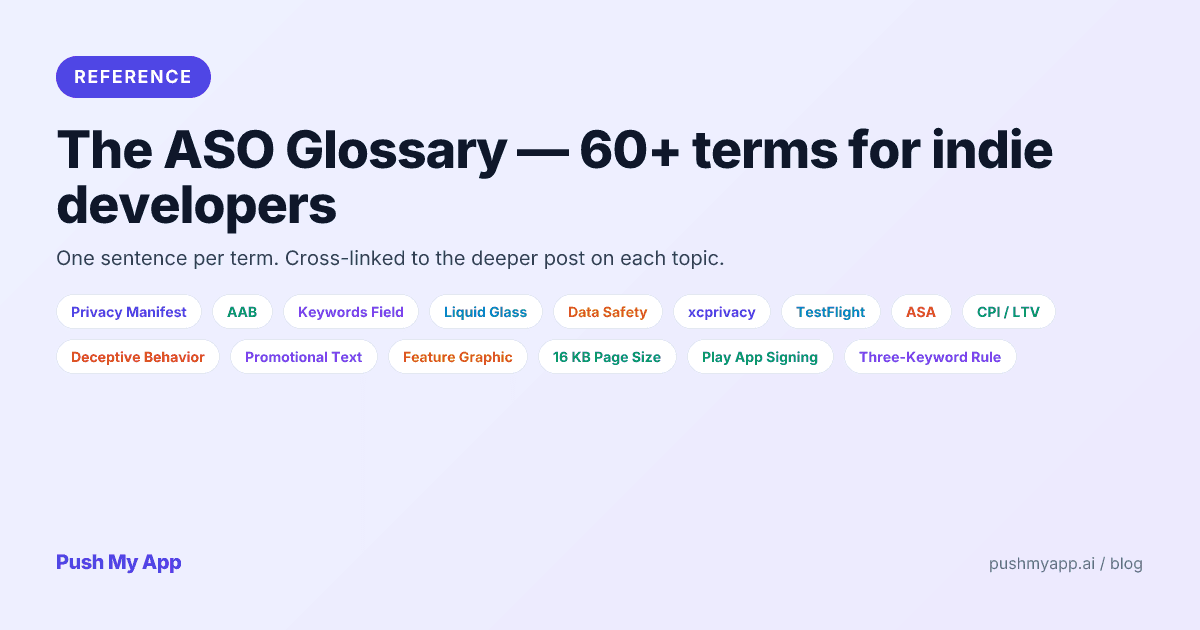
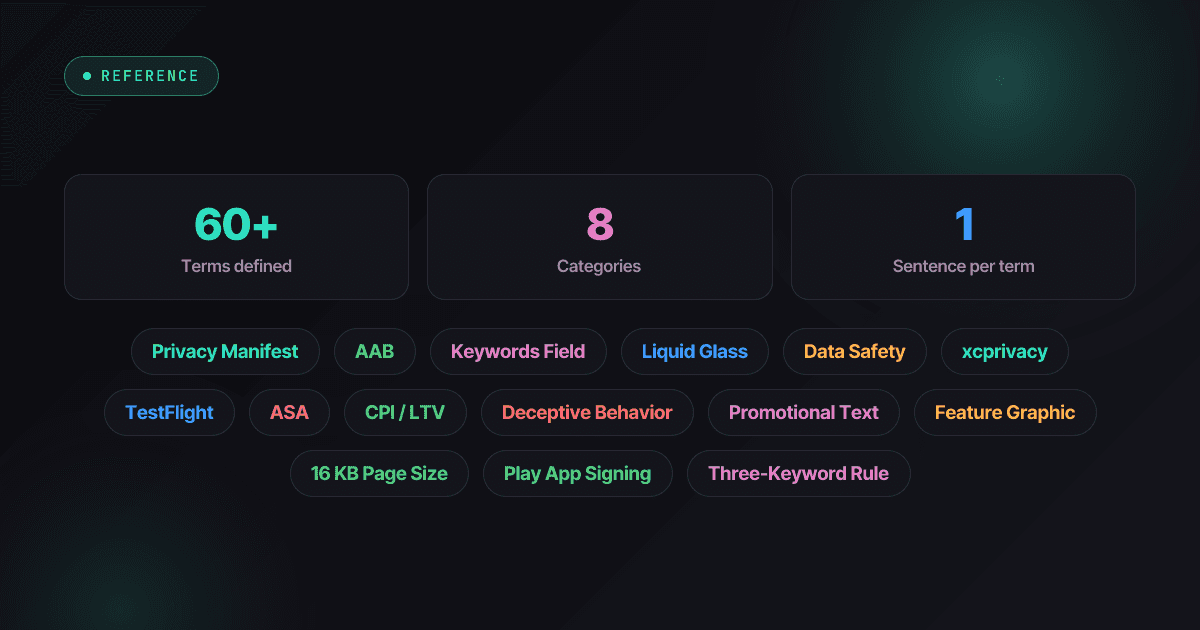
Plain-English definitions for 60+ App Store and Google Play terms — metadata fields, binary formats, rejection codes, testing tracks, EU distribution rules, and the metrics that matter in 2026.
Short, practical, no fluff. Join developers who get our best release notes in their inbox.
No spam · Unsubscribe anytime